

Marketing Strategy vs. Plan vs. Tactics for Law Firms
If you’re a managing partner or law firm owner reading this, chances are you’ve been sold on at least one of these promises:
“We’ll get you to rank #1 on Google.”
“Our LinkedIn strategy will get you leads.”
“Facebook Ads are the answer to filling your pipeline.”
Here’s the uncomfortable truth: those agencies aren’t lying. They might actually deliver on their tactical promise. You might rank #1. You might get LinkedIn engagement. You might even get leads from Facebook Ads.
But if you’re like most law firms, 72% of whom emphasize the importance of higher-quality leads over simply increasing lead volume (Spotlight Branding), you’ll quickly discover that random tactics without a cohesive strategy don’t build a sustainable law practice. They create an expensive treadmill where you’re constantly chasing the next marketing trend, burning through budget, and wondering why growth feels so unpredictable.
The problem isn’t that tactics don’t work. The problem is that most law firms, and the agencies serving them, confuse marketing tactics with marketing strategy, skip the critical planning phase entirely, and wonder why their marketing feels like throwing spaghetti at the wall.
Let’s fix that.
Why This Matters More Than Ever for Law Firms
The legal industry is more competitive than it’s ever been. 96% of people seeking legal advice use a search engine to begin their research (National Law Review), and more than one-third of potential clients search online first for an attorney (Clio, 2025). This means your potential clients are out there, but so are dozens of competitors all fighting for the same attention.

Here’s what makes this even more challenging: 83% of legal firms hire external marketing firms to do their marketing work (CallRail). That’s a lot of noise. A lot of agencies promising results. And unfortunately, many of those agencies are selling you one piece of the puzzle while telling you it’s the whole picture.
Meanwhile, law firms typically allocate 2-10% of total revenue toward marketing and client acquisition (Clio, 2025), with the average law firm spending between $105,000 – $210,000 annually on SEO marketing alone (FirstPageSage). That’s a significant investment… one that deserves a strategic approach, not scattered tactical execution.
The firms that are winning? They understand the difference between marketing strategy, plan, and tactics. They know how these three elements work together. And they’re building sustainable growth engines instead of constantly reacting to whatever their latest marketing vendor tells them to do.

What is a Marketing Strategy for Law Firms?
Your marketing strategy is the big picture framework that defines:
- What you want to achieve (your business and marketing goals)
- Who you’re trying to reach (your ideal client profile)
- Why clients should choose you (your unique value proposition and positioning)
- Where you’ll compete (practice areas, geographic markets, client types)
- How you’ll differentiate (what makes you different from competitors)
Think of strategy as your North Star. It’s the “why” and “what” before you ever get to the “how.”
Real Law Firm Strategy Examples
Example 1: Personal Injury Firm Strategy
- Goal: Become the go-to PI firm for construction worker injuries in metro area
- Target: Construction workers aged 25-55 earning $40-80K, injured on job sites
- Positioning: “The firm that speaks your language and knows construction site injuries inside and out.”
- Differentiation: Former construction worker on staff, bilingual services, evening consultations
- Market: 50-mile radius of three major metro construction zones
Example 2: Estate Planning Firm Strategy
- Goal: Position as the trusted advisor for high-net-worth retirees
- Target: Retirees with $2M+ in assets, age 60-75, concerned about legacy and tax efficiency
- Positioning: “Sophisticated estate planning that protects your legacy and minimizes tax burden.”
- Differentiation: CPA collaboration, multi-generational planning, proactive annual reviews
- Market: Affluent suburbs and retirement communities within the county
Notice how neither of these strategies mentions SEO, social media, or paid ads? That’s intentional. Marketing strategy comes first. Those are tactics that will support the strategy, but we’re getting ahead of ourselves.
Why Strategy Matters: The Cost of Getting It Wrong
Without a clear strategy, law firms make expensive marketing mistakes:
- Targeting everyone means reaching no one. A family law firm trying to appeal to both high-conflict divorces and collaborative mediation ends up with messaging that resonates with neither.
- Wasting budget on the wrong channels. A business litigation firm spending heavily on Facebook Ads to reach corporate counsel (who aren’t browsing Facebook looking for attorneys).
- Inconsistent messaging across platforms. Your website says one thing, your LinkedIn says another, and your intake team is talking about something else entirely.
- Chasing competitors blindly. Just because the firm down the street is on TikTok doesn’t mean you should be.
Research supports this: firms with a documented strategy are 331% more likely to report success (CoSchedule). While specific percentages vary by study, the pattern is clear. Strategic firms outperform tactical-only firms by substantial margins.
What is a Marketing Plan for Law Firms?
If strategy is your North Star, your marketing plan is your roadmap. It bridges the gap between big-picture strategy and day-to-day execution.
Your marketing plan translates strategy into actionable steps:
- Budget allocation (how much you’ll spend and where)
- Timeline and milestones (what happens when)
- Specific campaigns and initiatives (the tactics you’ll deploy)
- Resource assignment (who’s responsible for what)
- Success metrics (how you’ll measure results)
- Marketing mix (which channels and how they work together)
The Critical Difference: Marketing Strategy vs. Plan
Many firms confuse these two. Here’s how to tell them apart:
Your Marketing STRATEGY answers:
- WHO are we targeting? (Construction workers injured on the job)
- WHY will they choose us? (We understand construction and speak their language)
- WHAT makes us different? (Former construction worker on staff, bilingual services)
Your PLAN answers:
- HOW will we reach them? (SEO for “construction accident lawyer,” Spanish-language content, partnerships with workers’ comp doctors)
- WHEN will we execute? (Q1: website optimization, Q2: content campaign launch, Q3: partnership development)
- HOW MUCH will we invest? ($5K/month: $2K SEO, $1.5K content, $1K ads, $500 partnerships)
What a Law Firm Marketing Plan Looks Like
Let’s continue with our construction injury firm example. Here’s what their plan might include:
Q1 Objectives:
- Optimize website for construction injury keywords (rank top 3 for 5 target terms).
- Create 8 pieces of Spanish/English educational content about construction rights.
- Establish 3 referral partnerships with workers’ comp specialists.
Budget Breakdown:
- Website/SEO: $2,000/month
- Content creation: $1,500/month
- Paid advertising (Google/Spanish-language radio): $1,000/month
- Partnership development/relationship building: $500/month
- Total: $5,000/month ($60,000 annual)
Timeline:
- January: Complete website audit and keyword research
- February: Implement technical SEO fixes and launch first content piece
- March: Launch Spanish-language landing pages
- April: Begin doctor partnership outreach
- May: Activate paid search campaigns
- June: Evaluate Q1-Q2 results and adjust
Success Metrics:
- Website traffic from target keywords (+50% by Q2 end)
- Qualified consultation requests (+30% by Q2 end)
- Partnership referrals (minimum 5 by Q2 end)
- Cost per qualified lead (target: under $300)
Notice how specific this is? That’s the difference between a plan and a strategy. The strategy told us who and why. The plan tells us exactly how and when we’ll execute.
Unfortunately, only 47% of law firms have an annual marketing budget, and 49% of respondents expect their firm’s marketing emphasis to remain the same, while just 28% see it as more important (ABA). This lack of planning leads to reactive, inconsistent marketing that fails to build momentum.
What are Marketing Tactics for Law Firms?
Tactics are the specific actions and tools you use to execute your plan. They’re the “how” at the most granular level.
Common law firm marketing tactics include:
Digital Marketing Tactics
- SEO (Search Engine Optimization): Optimizing your website to rank for relevant searches
- Content Marketing: Blog posts, videos, guides, podcasts that educate potential clients
- Pay-Per-Click (PPC) Advertising: Google Ads, Bing Ads targeting specific keywords
- Social Media Marketing: LinkedIn, Facebook, Instagram, TikTok presence
- Email Marketing: Newsletters, nurture campaigns, client updates
- Online Directories: Avvo, Justia, Martindale-Hubbell, Google Business Profile
- Video Marketing: YouTube, firm videos, educational content
- Retargeting Ads: Following website visitors across the web
Traditional Marketing Tactics
- Networking: Bar associations, business groups, community organizations
- Referral Relationship Building: Relationships with other attorneys and professionals
- Speaking Engagements: Conferences, CLEs, community events
- Print Advertising: Magazines, newspapers, trade publications
- Radio/TV Advertising: Traditional broadcast media
- Community Sponsorships: Local events, sports teams, charitable organizations
- Direct Mail: Targeted mailings to specific audiences
Relationship & Reputation Tactics
- Client Review Generation: Systematic approach to gathering testimonials
- Referral Programs: Formal systems for encouraging client referrals
- Client Experience Optimization: From first contact through case resolution
- Public Relations: Media outreach, press releases, thought leadership
Here’s what’s fascinating about the data: networking was considered the most effective for ROI by 43% of law firms, while SEO was identified as the top ROI driver by just 11% (Spotlight Branding). Yet many firms are being sold SEO-only solutions by agencies who ignore the power of referral relationships.
This doesn’t mean SEO doesn’t work. In fact, the three-year ROI on SEO is an impressive 526% for the average law firm (FirstPageSage), but it means no single tactic is a silver bullet. 94% of law firms say search engines are their top channel for brand awareness (CallRail), yet 31% of lawyers personally retained a client through social media activity (ABA). Success comes from the right mix.
The Single-Tactic Trap
This is where many law firms get burned. An agency specializing in PPC calls and says, “We can get you leads!” They’re not lying. They probably can. But here’s what they’re not telling you:
- The leads might not be qualified. Getting 100 leads means nothing if only 5 are actually in your target practice area and geographic market.
- You have no system to nurture them. What happens when someone fills out a form but isn’t ready to hire today? Most firms lose them forever.
- It doesn’t build long-term assets. The moment you stop paying for ads, the leads stop. Compare this to content marketing or SEO that builds compounding value.
- It doesn’t integrate with other efforts. Your PPC agency doesn’t talk to your SEO consultant. Your social media person has no idea what your email campaigns are saying. Your brand message is inconsistent and confused.
- There’s no strategic filter. Is PPC even the right tactic for your target client? For your practice area? For your market? Without strategy, you’re just guessing.
Consider this: 67% of legal clients base their hiring decision on how fast a firm responds to their inquiry, and law firms responding within the first five minutes see a 400% higher conversion rate. (ALM) You can have the best PPC campaign in the world, but if you don’t have a plan for rapid response and client intake, you’re wasting money.
How Marketing Strategy, Plan, and Tactics Work Together
Let’s see how all three elements come together for a real law firm scenario.
Case Study: Small Business Law Firm
THE STRATEGY:
- Vision: Become the go-to legal partner for tech startups in the metro area
- Target Client: Early-stage tech companies (pre-Series A), 2-15 employees, founder-led
- Value Proposition: “Fast, founder-friendly legal guidance that grows with your startup”
- Positioning: Not a stuffy corporate firm, a partner who understands startup culture and speed
- Differentiation: Fixed-fee packages, 24-hour turnaround on standard docs, founder office hours
- Goals: 25 new startup clients in Year 1, $500K revenue, 80% client retention
THE PLAN: Quarter 1 Focus: Build Foundation
- Budget: $3,000/month
- Activities:
- Website relaunch with startup-focused messaging
- Create “Founder’s Legal Toolkit” lead magnet
- Publish 2 blog posts/month on startup legal issues
- Claim and optimize Google Business Profile
- Join 2 local startup communities
- Success Metrics:
- 1,000 monthly website visitors
- 50 toolkit downloads
- 2 new clients
Quarter 2 Focus: Establish Authority
- Budget: $4,000/month
- Activities:
- Launch “Legal Office Hours” for founders (monthly)
- Guest posts on 2 local startup blogs
- Start email newsletter for founders
- Begin LinkedIn content series
- Sponsor 1 startup meetup
- Success Metrics:
- 2,000 monthly website visitors
- 15 office hours attendees
- 5 new clients
Quarter 3-4: Scale and Optimize
- Budget: $5,000/month
- Activities:
- Launch targeted Google Ads for startup legal terms
- Create video series on YouTube
- Develop referral partnership with 3 accelerators
- Implement automated nurture campaigns
- Success Metrics:
- 3,500 monthly website visitors
- 10+ new clients per quarter
- 30% of new clients from referrals
THE TACTICS IN ACTION:
Each tactic supports the strategy:
- Website messaging emphasizes startup-friendly language and speed (differentiation)
- “Founder’s Legal Toolkit” directly addresses target client pain points
- Blog content focuses on early-stage startup issues (target client)
- Office hours format reflects startup culture and accessibility (positioning)
- Google Ads target startup-specific legal terms (where target clients search)
- Accelerator partnerships put firm in front of ideal clients (target market)
- Fixed-fee packages marketed across all channels (value proposition)
See how everything connects? The strategy defines who and why. The plan organizes the execution. The tactics are the specific actions. None of them work in isolation.
The Law Firm Marketing Flywheel: A Better Framework
Most marketing agencies talk about funnels: awareness → consideration → decision. That’s fine for one-time purchases, but it’s wrong for law firms.
Why? Because in legal services, your best marketing asset is a happy client who becomes a referral source. 53% of lawyers who maintain their own blogs gained clients directly or via referrals (ABA), showing the compounding effect of reputation-building efforts.
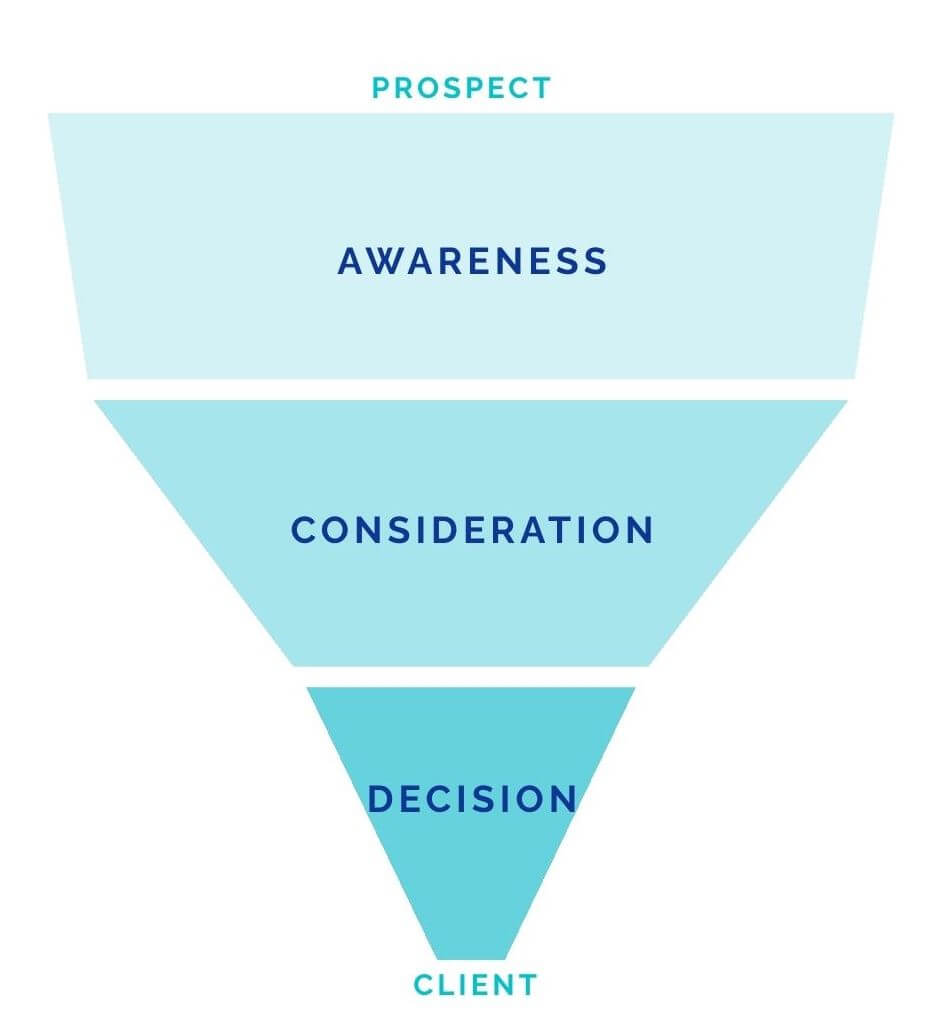

Instead of a funnel, think of your marketing as a flywheel with three phases:
1. ATTRACT: Get Found by the Right People
This is where most tactics live.
- SEO and content marketing that answer client questions.
- Paid advertising that targets your ideal client profile.
- Social media presence where your audience spends time.
- Networking and speaking where you build credibility.
- Online directories and local listings where people search.
The key word is “right” people. 72% of law firms emphasize the importance of higher-quality leads over simply increasing lead volume (Spotlight Branding). Your strategy defines who’s “right”. Your tactics determine how you attract them.
2. ENGAGE: Turn Interest into Trust
Once you’ve attracted the right people, you need to nurture them.
- Email nurture sequences that educate prospects
- Fast response times (remember that 5-minute response window with 400% higher conversion)
- Consultation experiences that build confidence
- Content that addresses specific concerns and objections
- Case results and testimonials that demonstrate expertise
- Clear, compelling calls-to-action that make hiring easy
This is where your plan comes in, coordinating all these touchpoints so they work together rather than sending mixed messages.
3. AMPLIFY: Turn Clients into Your Marketing Team
This is where law firms create sustainable growth.
- Exceptional client experience that exceeds expectations.
- Systematic review generation and testimonial collection.
- Referral programs that make it easy to refer.
- Client nurture and staying top-of-mind post-case.
- Content featuring client success stories (with permission).
- Alumni networks and ongoing value for past clients.
When you get this right, the flywheel spins faster. Happy clients refer other clients who fit your ideal profile (because people know people like themselves). Those referred clients convert at higher rates because they come pre-sold. They become happy clients who refer more clients. The wheel builds momentum.
This is why having a marketing strategy matters. Without knowing who you’re trying to attract, you can’t create the consistent experience that turns clients into advocates. Without a plan coordinating all the tactics, your client experience is disjointed. And without the right tactics, you never build the momentum in the first place.
Common Mistakes Law Firms Make
Mistake #1: Skipping Strategy and Jumping to Tactics
What it looks like: “Everyone’s doing TikTok videos, we should too!” or “Let’s hire an SEO agency and get ranked.”
Why it fails: Without strategy, you don’t know if TikTok reaches your target client. You don’t know what to say in your videos. You can’t measure if it’s working beyond vanity metrics.
The fix: Start with strategy. Define your target client, your positioning, your goals. Then, and only then, choose tactics that support them.
Mistake #2: Hiring Single-Tactic Agencies
What it looks like: An SEO-only agency, a PPC-only agency, a social media-only agency… each claiming they have “the answer.”
Why it fails: These agencies are incentivized to sell their specialty, regardless of whether it’s right for you. They don’t coordinate with your other efforts. You end up with tactical silos that don’t build on each other.
The fix: Either hire a strategic marketing leader (like a Fractional CMO) who coordinates all tactics to deliver results, or demand that any agency partner understand and align with your overall strategy.
Mistake #3: No Planning Between Strategy and Execution
What it looks like: “We know we want to target small businesses. Let’s just start posting on LinkedIn!”
Why it fails: You haven’t thought through budget, timeline, resource allocation, how tactics integrate, or how you’ll measure success. Result: scattered, inconsistent execution.
The fix: Create a marketing plan. It doesn’t have to be 50 pages, even a simple one-page plan beats no plan. Define your budget, choose 3-5 core tactics, set timelines, assign ownership, establish metrics.
Mistake #4: Changing Course Too Quickly
What it looks like: “We’ve been doing content marketing for 2 months and haven’t seen results. Let’s try paid ads instead.”
Why it fails: Most marketing tactics need 6-12 months to show meaningful results. In fact, on average, it takes 14 months for law firms to recoup their SEO investment (FirstPageSage). Constantly switching tactics means you never build momentum.
The fix: Commit to your plan for at least 2-3 quarters before major changes. Make small optimizations along the way, but don’t abandon your strategy because tactics need time to compound.
Mistake #5: Treating All Leads Equally
What it looks like: Measuring success by lead volume without considering lead quality or conversion rates.
Why it fails: 100 unqualified leads cost you more time and money than 10 qualified ones. Law firms responding within the first five minutes see a 400% higher conversion rate, but that only matters if the leads are qualified to begin with.
The fix: Define what a qualified lead looks like in your strategy. Track quality metrics, not just quantity. Optimize for leads that match your ideal client profile.
Mistake #6: Ignoring the Amplify Phase
What it looks like: All marketing budget goes to attracting new clients. Nothing allocated to client experience, referral generation, or alumni engagement.
Why it fails: You’re constantly refilling a leaky bucket. Networking was considered the most effective for ROI by 43% of law firms (Spotlight Branding), much of that is referrals from past clients and professional relationships.
The fix: Allocate at least 20% of your marketing effort to the “Amplify” phase. Build systematic review generation, referral programs, and client nurture into your plan.
Mistake #7: No Measurement System
What it looks like: “We’re doing marketing, but we’re not sure if it’s working.”
Why it fails: Without measurement, you can’t optimize. You don’t know what’s working, what’s not, or where to invest more resources. 51% of law firms use Google Analytics to determine where they will spend their marketing budget (CallRail), meaning nearly half aren’t using data at all.
The fix: Build measurement into your plan from day one. At minimum, track:
- Website traffic and sources
- Consultation requests by source
- Conversion rate (consults to clients)
- Cost per client acquisition by channel
- Client lifetime value
- Referral sources and volume
How to Build Your Marketing Strategy, Plan, and Tactics
Step 1: Start with Strategic Clarity (2-4 weeks)
Answer these fundamental questions.
Business Goals
- What do you want to achieve in the next 1-3 years?
- How many clients do you need? What’s their average value?
- What revenue targets are you trying to hit?
- What type of work do you want to be doing?
Target Client
- Who is your absolute ideal client? Be specific.
- What problems do they have that you solve?
- Where do they look for legal help?
- What do they value in an attorney?
- What objections or concerns do they have?
Positioning & Differentiation
- Why should someone choose you over competitors?
- What do you do better or differently?
- What can you credibly claim that others can’t?
- What’s your unique angle or approach?
Market Reality
- Who are your main competitors?
- What are they doing well in marketing?
- Where are the gaps or opportunities?
- What’s realistic given your budget and resources?
Take the time to document this. Only 47% of law firms have an annual marketing budget (ABA), meaning most firms are operating reactively. Be in the strategic minority.
Step 2: Create Your Marketing Plan (1-2 weeks)
Translate strategy into action.
Set Specific Goals
- Make them SMART (Specific, Measurable, Achievable, Relevant, Time-bound).
- Example: “Acquire 15 new estate planning clients in Q1 with average case value of $5,000.”
Determine Budget
- Consider the industry norm of 2-10% of revenue.
- Allocate across channels based on where your target clients are.
- Include both ongoing costs and one-time investments.
- Reserve 10-20% for testing new tactics.
Choose Your Core Tactics
- Select 3-5 tactics that reach your target client where they are.
- Ensure tactics complement each other (don’t work in silos).
- Consider what you can realistically execute with your resources.
- Balance quick wins with longer-term investments.
Map Your Timeline
- Create quarterly objectives with monthly milestones.
- Be realistic about implementation time.
- Build in review points to assess and adjust.
- Sequence tactics logically (foundation first, then scale).
Assign Ownership
- Who’s responsible for each tactic?
- What skills or resources do you need?
- Will you hire internally, outsource, or both?
- How will coordination happen?
Define Success Metrics
- What will you measure for each tactic?
- How will you track it?
- What benchmarks will you use?
- When will you review performance?
Step 3: Execute Your Tactics (Ongoing)
Now, finally, you’re ready to execute.
Start with Foundation
- Ensure website reflects your positioning and targets your ideal client.
- Set up tracking and measurement systems.
- Create core marketing materials that align with your strategy.
- Establish basic automation for lead nurture.
Launch Priority Tactics
- Begin with tactics that have shortest time-to-value.
- Implement systematically, not all at once.
- Document processes as you go.
- Build consistency before adding complexity.
Coordinate Across Channels
- Ensure messaging is consistent everywhere.
- Cross-promote between channels.
- Use retargeting to connect tactics.
- Create integrated campaigns, not isolated efforts.
Monitor and Optimize
- Review data weekly or bi-weekly.
- Make small adjustments based on performance.
- Test variations to improve results.
- Document what you learn.
Maintain the Flywheel
- Don’t neglect existing clients while chasing new ones.
- Build systematic touchpoints throughout client journey.
- Create easy referral mechanisms.
- Nurture your referral network.
Step 4: Review and Refine (Quarterly)
Every 90 days, step back and evaluate.
What’s Working
- Which tactics are delivering qualified leads?
- What’s the cost per acquisition by channel?
- Which content or campaigns performed best?
- Where should you invest more?
What’s Not Working
- Which tactics are underperforming?
- Why? (execution issue vs. wrong tactic vs. needs more time)
- What should you optimize vs. eliminate?
- Where are you wasting budget?
What’s Changed
- Has your market shifted?
- Are competitors doing something new?
- Have client needs or preferences evolved?
- Does your strategy need updating?
What’s Next
- What should you test in the next quarter?
- Where can you scale what’s working?
- What new tactics support your strategy?
- What resources do you need?
When to Get Marketing Support
Building and executing a comprehensive marketing strategy for a law firm is significant work. Many law firms discover they need one or more of the following:
Option 1: Hire a Fractional CMO
Best for firms that need strategic leadership and coordination but don’t have the budget or workload for a full-time marketing executive.
A Fractional CMO:
- Develops your overall marketing strategy.
- Creates your marketing plan and oversees execution.
- Coordinates all tactics (whether internal or outsourced).
- Provides senior-level expertise at a fraction of full-time cost.
- Brings experience across many law firms and industries.
- Can build and manage your marketing team or agency relationships.
This is ideal if you’re currently working with multiple vendors or freelancers who need coordination, if your marketing feels scattered, or if you want strategic leadership without the full-time commitment.
Check out our Fractional CMO offering to learn more about how they can help you grow.
Option 2: Learn to Do Your Own Marketing
Seek out resources to learn more about marketing, like our marketing membership. Best for law firms that want guidance, templates, and education but prefer to execute marketing themselves.
Our membership provides:
- Strategy frameworks and templates
- Training on key marketing tactics
- Implementation checklists and SOPs
- Community of other legal professionals
- Regular Q&A and coaching
- Access to tools and resources
This works if you or someone on your team has time to execute, you want to build internal marketing capabilities, and you prefer the DIY approach with expert guidance.
Learn more about our Marketing Membership and how you can make your marketing work for you.
Option 3: Hire a Full-Service Strategic Agency
Best for firms with significant budget who want strategy AND execution handled externally.
Look for an agency that:
- Starts with strategy, not tactics
- Has deep law firm marketing experience
- Offers integrated services, not just one specialty
- Provides transparent reporting and measurement
- Aligns incentives with your success
Beware of agencies that pitch a single tactic (“We’re the SEO experts!”) without understanding your broader strategy. You want a partner who asks about your business goals, ideal clients, and positioning before recommending tactics.
The Bottom Line: Strategy First, Always
Here’s what we’ve learned from working with dozens of law firms:
The firms that struggle:
- Jump from tactic to tactic based on what’s trendy.
- Hire single-specialty vendors who don’t coordinate.
- Measure the wrong things (vanity metrics vs. business impact).
- Lack documented strategy and consistent execution.
- Treat marketing as an expense to minimize rather than an investment to optimize.
The firms that thrive:
- Start with clear strategy that defines who, what, and why.
- Create plans that translate strategy into coordinated action.
- Choose tactics that support strategy, not chase shiny objects.
- Measure what matters and optimize based on data.
- Treat marketing as a systematic growth engine.
- Build the flywheel that creates compounding momentum.
The difference isn’t the size of the marketing budget. It’s the strategic thinking that guides how that budget gets deployed.
Remember: The 3-year ROI for an average law firm is around 526% from SEO. Law firms responding within the first five minutes of an inquiry see a 400% higher conversion rate . 72% of law firms emphasize the importance of higher-quality leads over simply increasing lead volume.
These statistics tell us that marketing works, when you understand the difference between a strategy, plan, and tactics, and how they work together to build your marketing flywheel.
Your Next Step
If you’re reading this and recognizing that your firm has been stuck in the tactics, here’s what to do:
- Audit your current situation. Make a list of every marketing tactic you’re currently doing. For each one, ask: “What strategic goal does this support?” If you can’t answer clearly, it’s probably not aligned.
- Define your strategy. Block out time to answer the strategic questions in this article. Who’s your ideal client? What’s your positioning? What makes you different? Write it down.
- Create a simple plan. You don’t need a 50-page document. A one-page plan that outlines your goals, budget, core tactics, timeline, and success metrics is infinitely better than no plan.
- Get expert help if you need it. Whether it’s a Fractional CMO to develop and lead your strategy, our membership program to guide your execution, or a strategic agency partner. Don’t try to figure this all out alone.
The legal market is only getting more competitive. 96% of people seeking legal advice use a search engine (National Law Review), and they’re being bombarded with marketing from dozens of firms just like yours.
The firms that win won’t be the ones who spend the most on marketing. They’ll be the ones who approach marketing strategically, with clear positioning, comprehensive plans, and coordinated tactics that build momentum over time.
Stop doing random acts of marketing. Start building a strategic growth engine.
Ready to build a strategic marketing approach for your law firm?
We specialize in helping law firms develop comprehensive marketing strategies that actually drive results, not just scattered tactics that waste budget. Our Fractional CMO services provide strategic leadership to coordinate all your marketing efforts, while our membership program offers guided implementation for firms who want to build internal capabilities.
Schedule a marketing strategy consultation to discuss how we can help your firm move from tactical chaos to strategic growth.


