

The Law Firm Marketing Flywheel: Why Funnels Fail and Flywheels Win
You didn’t go to law school to become a marketer.
Yet here you are, trying to figure out why your marketing feels like pushing a boulder uphill. You’ve tried the webinars, posted on LinkedIn a few times, maybe even hired an SEO agency that promised first-page rankings. But the results? Inconsistent at best. And every hour you spend on marketing is an hour you’re not billing.
The problem isn’t your effort. It’s that most legal marketing advice treats your practice like it needs a funnel, a one-way pipeline where you pour prospects in at the top and hope clients come out at the bottom.
But funnels leak. They require constant feeding. And worst of all, they end once someone becomes a client.
Here’s the reality: Networking was considered the most effective for ROI by 43% of law firms, while SEO was identified as the top ROI driver by just 11% (Spotlight Branding). Why? Because referrals and relationships compound over time, while most marketing tactics require constant investment to maintain results.
There’s a better way: the marketing flywheel.
What is a Marketing Flywheel?
A marketing flywheel is a self-sustaining system where happy clients become your best marketing asset. Instead of constantly hunting for new prospects, you build momentum by creating such a good experience that clients naturally refer others—who then become clients, who refer more people, and so on.
Think of it like a literal flywheel: It takes effort to get it spinning, but once it’s moving, momentum builds. Each rotation makes the next one easier.
The flywheel has three stages that work in a continuous loop:
Attract → Engage → Amplify → (back to Attract)
Here’s how it works, and why it’s fundamentally different from the marketing funnel approach that’s failing most law firms.
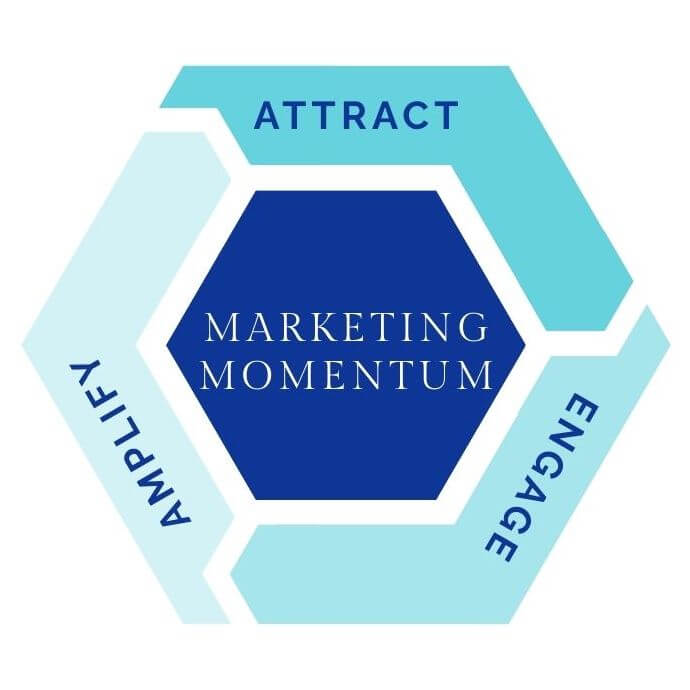
Flywheel vs. Funnel: Why the Difference Matters for Law Firms
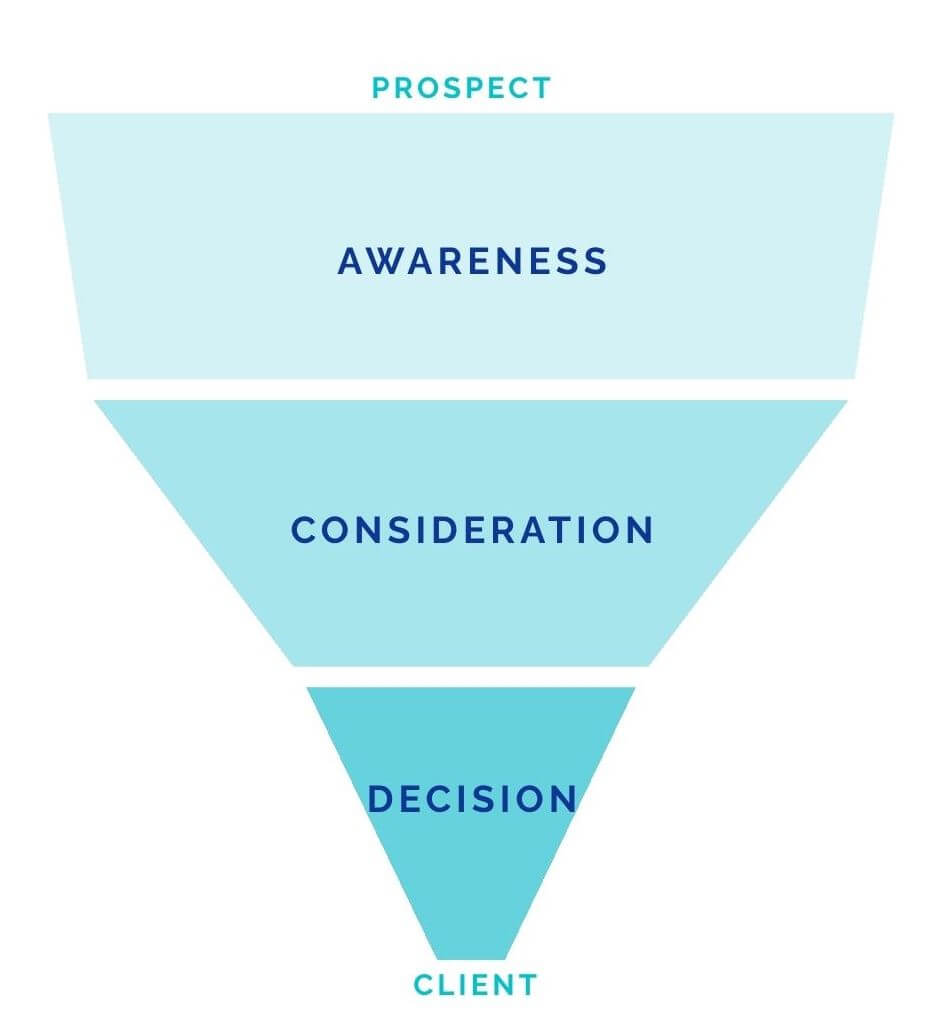
Most marketing agencies pitch the traditional funnel model:
Awareness → Consideration → Decision → (done)
Funnels treat clients as the end goal. Once someone hires you, they’re out of the system. You have to constantly fill the top of the funnel with new prospects just to maintain your current caseload.
This is why 74% of law firms believe they’ve wasted money on marketing campaigns that don’t bring high returns on investment (CallRail). The funnel model forces you to constantly pay for new leads because it doesn’t leverage your most valuable marketing asset: satisfied clients.
The flywheel flips this thinking:
- Clients aren’t the end. They’re the beginning of your next growth phase.
- Each happy client reduces your need for expensive lead generation.
- Momentum compounds over time instead of starting from zero every month.
Here’s what this means practically:
With a funnel, if you stop running ads or posting content for a month, your pipeline dries up. With a flywheel, you’ve built a system where past clients continue working for you even when you’re heads-down on billable work.
The funnel asks: “How do I get more prospects?”
The flywheel asks: “How do I create an experience so good that my clients do my marketing for me?”
Consider this: 53% of lawyers who maintain their own blogs gained clients directly or via referrals (ABA). That’s the flywheel effect in action. Content attracts prospects. Those prospects become clients. Those clients refer others who’ve been educated by that same content.
The Three Stages of the Law Firm Marketing Flywheel

Stage 1: Attract (Prospects Find You)
This is where potential clients first learn about your firm. They might find you through Google search, a referral from a past client, your LinkedIn content, a speaking engagement, or online directories.
The goal isn’t to blast your message everywhere. It’s to be strategically visible where your ideal clients are already looking for help.
What belongs in the Attract stage:
- SEO and content marketing (blog posts, FAQs, practice area pages that answer real client questions)
- Google Business Profile optimization (96% of people seeking legal advice use a search engine to begin their research (NatLawReview))
- Speaking engagements and thought leadership (establishing authority in your practice area)
- LinkedIn presence and strategic networking (31% of lawyers personally retained a client through social media activity (ABA))
- Referrals from past clients (the output of your Amplify stage feeding back into Attract)
- Strategic partnerships with other professionals (CPAs, financial advisors, other attorneys)
- Local community involvement (especially powerful for solo and small firms)
The goal: Be visible and credible where your ideal clients are looking.
Common mistake: Firms invest heavily here but ignore the other two stages. You can attract all the traffic in the world, but if you can’t convert prospects or generate referrals, you’re stuck on an expensive treadmill.
Stage 2: Engage (Prospects Become Clients)
Once someone finds you, they need to trust you enough to hire you. This stage is about building credibility and making it easy to take the next step.
This is where the relationship shifts from “I found this lawyer” to “This is my lawyer.”
Here’s why this matters: 67% of legal clients base their hiring decision on how fast a firm responds to their inquiry, and law firms responding within the first five minutes see a 400% higher conversion rate (ALM Global). Your Engage stage determines whether you capture the prospects your Attract stage worked so hard to generate.
What belongs in the Engage stage:
- Website user experience optimized for conversion (clear calls-to-action, mobile-friendly, fast loading)
- Fast, professional responses to inquiries (remember that 5-minute window)
- Consultation process that builds trust and demonstrates expertise
- Educational resources that show you understand their specific problem
- Email follow-up sequences for prospects who aren’t ready to hire yet
- Clear communication about pricing, process, and what to expect
- Removing friction from the hiring process (easy scheduling, simple retainer agreements)
The goal: Make it easy to choose you and hard to choose anyone else.
Common mistake: Law firms spend thousands on SEO or PPC but have websites that don’t convert, slow response times, or poor consultation processes. The result? The average law firm website converts at just 2.07%, meaning 98 out of 100 visitors leave without becoming leads.
Stage 3: Amplify (Clients Become Promoters)
After you’ve delivered great legal work, the Amplify stage turns satisfied clients into active referral sources. This doesn’t happen by accident. It happens when you create intentional touchpoints that keep you top-of-mind and make it easy for clients to refer others.
This is the stage most law firms completely ignore, and it’s costing them thousands in unnecessary marketing spend.
What belongs in the Amplify stage:
- Exceptional client experience from initial contact through case resolution
- Regular communication throughout the representation (not just when you need something from them)
- Post-case follow-up and check-ins (most firms disappear after the check clears)
- Review requests on Google, Avvo, and other platforms where prospects look
- Referral systems that make it easy for clients to send people your way
- Staying top-of-mind after the case closes (newsletters, helpful updates, holiday cards)
- Creating “wow” moments that clients want to talk about
- Alumni engagement treating past clients as valuable relationships, not finished transactions
The goal: Turn satisfied clients into active advocates who send you qualified referrals.
Why this matters: Remember that 43% of law firms say networking (which includes referrals) is their most effective ROI driver. Yet most firms have no systematic approach to generating referrals. They hope it happens instead of making it happen.
The magic: When promoters send new prospects back into the Attract stage, your flywheel starts to spin on its own. Each rotation builds momentum for the next.
Why Lawyers Struggle with Marketing (And How the Flywheel Fixes It)
Let’s be honest about why marketing feels so hard.
You’re not a salesperson.
The idea of “marketing yourself” feels uncomfortable, maybe even unethical. The flywheel removes the pressure to “sell” by focusing on creating value at every stage. You’re not being pushy. You’re being helpful, visible, and memorable.
You don’t have time.
Every hour spent on marketing is an hour you’re not billing. The flywheel is designed to build momentum so that marketing becomes less time-intensive over time. Your clients do more of the heavy lifting through referrals and reviews.
You’re jumping from tactic to tactic.
One month it’s SEO, the next it’s LinkedIn, then maybe a networking event. Without a framework, you’re guessing. The flywheel gives you a clear system: every marketing activity should either help prospects attract you, help prospects engage with you, or help clients amplify your message. If it doesn’t fit one of these stages, it’s probably not worth your time.
As we covered in our complete guide to marketing strategy vs. plan vs. tactics, tactics without strategy is just expensive guesswork.
You’re tracking the wrong things—or nothing at all.
Only 37% of law firms have systems in place to track ROI from their marketing dollars (Best Law Firms), and 65% of lawyers don’t know which metrics to measure and track in their marketing campaigns (CallRail).
The flywheel forces you to measure what matters at each stage.
- Attract metrics: Website traffic, consultation requests, source of inquiries
- Engage metrics: Consultation-to-hire conversion rate, response time, time-to-consultation
- Amplify metrics: Referral rate, review volume, client satisfaction scores, repeat/referral business percentage
You don’t have a system for referrals.
You know referrals matter, but asking for them feels awkward. The flywheel makes referrals systematic. You’re not begging for help. You’re creating moments where clients naturally want to share your name because you’ve made their experience remarkable.
How the Flywheel Creates Momentum Over Time
The real power of the flywheel is compounding momentum. Here’s what that looks like in practice.
Months 1-3: Initial Effort
You’re creating content, optimizing your website, improving your consultation process, and implementing a client feedback system. This feels like work because you’re building the foundation. You’re pushing the flywheel to get it moving.
What’s happening:
- Publishing 2-4 helpful blog posts per month.
- Optimizing your Google Business Profile.
- Creating a consultation checklist that improves your close rate.
- Setting up a review request system.
- Establishing response time protocols.
Results: A few new inquiries from search. Maybe one referral. It feels slow.
Months 4-6: Early Returns
A few clients leave glowing reviews. One refers a friend. Your website starts ranking for a key search term. You’re getting 2-3 consultation requests per month from your content. The flywheel is starting to turn.
What’s happening:
- Your content is getting indexed and starting to rank.
- Your improved consultation process is converting better (maybe 30% to 40%).
- Past clients are seeing your review requests and responding.
- Your Google Business Profile is showing up in local searches.
Results: 5-7 qualified inquiries per month. 2-3 new clients. 10-15 new reviews.
Months 7-12: Momentum Builds
Referrals become more consistent. Your Google Business Profile is showing up in local searches. Past clients are sending you cases. You’re getting 5-8 qualified leads per month, and half of them came from sources you built months ago. The flywheel is spinning faster with less effort from you.
What’s happening:
- Content from 3-6 months ago is driving consistent traffic.
- Your review count is building social proof (more reviews = more conversions).
- Happy clients from months 1-6 are starting to refer.
- Your consultation-to-hire rate has improved to 50%+ because you’ve refined your process.
Results: 10-15 qualified inquiries per month. 5-7 new clients. Growing percentage from referrals.
Months 13+: Self-Sustaining Growth
You have a steady flow of referrals. Your content from six months ago is still bringing in prospects. Your consultation-to-hire rate has improved because you’ve refined your process. You’re selective about which cases you take. The flywheel is working.
What’s happening:
- 40-50% of new clients come from referrals.
- Your content library is driving consistent organic traffic.
- Your reviews and reputation are converting prospects at higher rates.
- You’re spending less time on top-of-funnel marketing and more time on high-value client work.
Results: Predictable, consistent growth without the feast-or-famine cycle.
This is the opposite of what most solo and small firm lawyers experience. Instead of starting from zero every month, you’ve built a system that compounds.
The Biggest Mistake Law Firms Make with the Flywheel
Most attorneys invest heavily in the Attract stage, paying for ads, hiring SEO agencies, posting on social media, while completely ignoring Engage and Amplify.
Here’s what happens:
- They get leads, but can’t convert them (poor Engage stage).
- They get clients, but those clients never refer anyone (no Amplify stage).
- They’re stuck on a treadmill, constantly paying for more leads.
This is why law firms can waste up to 60% of their marketing spend due to inefficient processes and misaligned strategies (Lawbrokr). They’re pouring money into attracting prospects but have leaky Engage and non-existent Amplify stages.
The flywheel only works when all three stages work together.
- A great Amplify stage reduces your need for expensive Attract tactics.
- A strong Engage stage means you convert more of the prospects you worked hard to attract.
- An effective Attract stage fills your pipeline while your Amplify stage builds momentum.
Think of it this way: If you’re converting 20% of consultations and getting zero referrals, even the best SEO in the world won’t build a sustainable practice. But if you improve your conversion to 50% and start getting 30% of your clients from referrals, you can grow significantly while spending less on marketing.
How to Get Started with Your Marketing Flywheel
You don’t need to overhaul everything at once. Start here:
1. Audit Where You Are Now
Look at each stage and be honest.
Attract:
- How are people finding you today? Is it working?
- What percentage of inquiries come from search vs. referrals vs. other sources?
- Which channels are driving qualified prospects vs. tire-kickers?
Engage:
- What percentage of consultations turn into clients?
- How quickly do you respond to inquiries?
- Where are you losing people in the process?
- What’s your average time from inquiry to consultation to retention?
Amplify:
- How many referrals did you get last month?
- Do you have a systematic review request process?
- When was the last time you contacted a past client?
- What percentage of new clients come from past client referrals?
Most firms discover one stage is significantly weaker than the others. That’s your starting point.
2. Identify Your Biggest Gap
If you’re getting inquiries but not converting them: Focus on your Engage stage.
- Improve response times (aim for under 5 minutes during business hours).
- Refine your consultation process.
- Make your pricing and process clearer.
- Remove friction from hiring you.
If you’re converting well but have no consistent lead flow: Focus on your Attract stage.
- Start publishing helpful content regularly.
- Optimize your Google Business Profile.
- Ensure your website is SEO-optimized for your practice area.
- Build strategic referral partnerships.
If you’re getting clients but no referrals: Focus on your Amplify stage.
- Implement a systematic review request process.
- Create a referral program.
- Stay in touch with past clients.
- Improve your client experience to create “wow” moments.
3. Implement One Improvement Per Stage
Don’t try to do everything. Pick one concrete action for each stage:
Attract example: Start publishing one helpful blog post per month answering real client questions.
Engage example: Create a consultation checklist that helps you demonstrate expertise and close more cases.
Amplify example: Implement a review request system for every successfully closed case (send within 2 weeks of resolution).
4. Measure What Matters
Track simple metrics at each stage.
Attract metrics:
- Website visitors per month
- Consultation requests per month
- Source of inquiries (organic search, referral, social, etc.)
Engage metrics:
- Consultation-to-hire conversion rate
- Average response time to inquiries
- Time from inquiry to consultation
Amplify metrics:
- Number of referrals per month
- Review count and average rating
- Percentage of new clients from referrals
- Client satisfaction scores (if you survey)
5. Build Momentum Over Time
Give it six months of consistent effort. The flywheel doesn’t spin overnight, but once it does, you’ll wonder why you ever relied on the feast-or-famine cycle.
Remember: On average, it takes 14 months for law firms to recoup their SEO investment (FirstPageSage). Marketing is a long game. The flywheel rewards patience and consistency.
Why This Works Better for Small Law Firms
The flywheel isn’t just for big firms with marketing departments. It’s actually better suited for solo and small firms because:
You have closer client relationships.
You’re not one attorney among 50. Clients remember you personally. That personal connection makes referrals and reviews more natural. When someone asks for a lawyer referral, your clients think of you by name, not just “that firm that handled my case.”
You’re more agile.
You can implement changes quickly without layers of approval. If you realize your consultation process isn’t working, you can fix it this week. Big firms need committee meetings.
Your reputation matters more locally.
In your community or practice area, a few strong advocates can transform your practice. You don’t need thousands of clients. You need dozens of loyal advocates who send you qualified referrals.
You can’t outspend competitors, but you can out-systematize them.
Larger firms might have bigger ad budgets. They can afford to waste 60% of their marketing spend. You can’t. But you can create a better client experience, respond faster, and build stronger relationships. Your experience can be your competitive advantage.
The data backs this up: While law firms typically allocate 2-10% of total revenue toward marketing (Clio), with the average firm spending $120,000 annually on SEO alone (FirstPageSage), small firms that build effective flywheels can grow with a fraction of that spend because they’re leveraging their most valuable asset: client relationships.
Real-World Flywheel Example: Estate Planning Firm
Let’s see how this works in practice:
The Firm: Solo estate planning attorney in suburban market
The Challenge: Competing against larger firms with bigger marketing budgets
The Flywheel Strategy:
Attract Stage:
- Published 2 blog posts per month answering common estate planning questions.
- Optimized Google Business Profile with clear service descriptions.
- Spoke quarterly at local library about estate planning basics.
- Partnered with 3 local financial advisors for reciprocal referrals.
Engage Stage:
- Implemented 30-minute response time goal for all inquiries.
- Created consultation packet that educated prospects before meeting.
- Streamlined engagement process with e-signature retainer agreements.
- Added FAQ page to website addressing common objections.
Amplify Stage:
- Sent review request 2 weeks after estate plan delivery.
- Implemented quarterly newsletter for past clients.
- Created simple referral program (thank you gift for referrals).
- Added “help your friends” language to closing documents.
Results After 12 Months:
- Website traffic increased 300% (mostly organic search from content).
- Consultation-to-hire rate improved from 35% to 58%.
- 40% of new clients came from past client referrals.
- Review count grew from 8 to 47 (4.9-star average).
- Revenue increased 85% with marketing spend decreasing 30%.
The Flywheel Effect: Content attracted prospects → Fast response and good consultation process converted them → Great experience generated reviews and referrals → Those referrals came pre-sold and converted even better → More happy clients generated more referrals
By Month 12, the attorney was turning down work that didn’t fit her ideal client profile (something unimaginable when she was in feast-or-famine mode).
The Marketing You Can Actually Sustain
Here’s the truth: You’re busy. You didn’t become a lawyer to become a marketer. And you’re skeptical of anyone promising you 100 leads per month or first-page Google rankings by next Tuesday.
The flywheel isn’t a magic trick. It’s a system.
It acknowledges that you don’t have unlimited time or budget. It works with the reality of your practice instead of against it. And it turns your best asset, satisfied clients, into your most effective marketing channel.
Most importantly, it builds momentum that lasts. You’re not starting from scratch every month. You’re creating a practice where marketing gets easier over time, not harder.
This is the difference between:
- Tactical marketing (buy more ads, post more content, chase more leads)
- Strategic marketing (build a system where happy clients do your marketing for you)
As we outlined in our piece on why single-tactic agencies fail law firms, most marketing vendors want to sell you one piece of the flywheel. They’ll optimize your SEO (Attract stage only). They’ll run your ads (Attract stage only). They’ll manage your social media (Attract stage only).
But without all three stages working together, you’re stuck on the expensive treadmill.
Getting Your Flywheel Spinning: What’s Next?
Understanding the flywheel is the first step. Implementing it is where the real work happens.
You have two paths forward:
Option 1: Build It Yourself with Strategic Guidance
If you have the time and want to maintain control over execution, consider joining our marketing membership program that provides:
- Step-by-step frameworks for each flywheel stage.
- Templates and checklists you can implement immediately.
- Guidance on what to prioritize based on your practice area.
- Community of other firm owners building their flywheels.
- Monthly training and Q&A to keep you on track.
This works best if you or someone on your team can dedicate 5-10 hours per month to implementation.
Option 2: Get Strategic Leadership to Build It For You
If you don’t have the time or expertise to build your flywheel, consider hiring a Fractional CMO who can:
- Audit your current Attract, Engage, and Amplify stages.
- Develop a comprehensive flywheel strategy aligned with your firm’s goals.
- Coordinate all marketing tactics to work together.
- Implement systems for each stage.
- Measure performance and optimize continuously.
- Bring expertise from working with dozens of law firms.
This works best if you’re spending $3,000+ per month on marketing but not seeing the ROI, or if you want strategic leadership without hiring a full-time marketing executive.
Learn more about how Fractional CMOs help law firms build sustainable growth systems.
Stop Pushing the Boulder. Start Spinning the Flywheel.
The feast-or-famine cycle isn’t inevitable. It’s the result of treating marketing as a series of disconnected tactics instead of a comprehensive system.
The flywheel approach works because it:
- Leverages your best marketing asset (happy clients).
- Builds momentum that compounds over time.
- Reduces your dependence on expensive lead generation.
- Creates predictable, sustainable growth.
- Aligns with how people actually hire attorneys (trust, referrals, reputation).
Most law firms will continue doing what they’ve always done: throwing money at SEO agencies, running ads that generate unqualified leads, and wondering why growth feels so hard.
But you don’t have to be most law firms.
You can build a marketing system that gets easier and more effective over time. You can create a practice where satisfied clients become your most powerful marketing channel. You can stop pushing the boulder uphill and start building momentum.
The boulder doesn’t have to feel this heavy. Let’s get your flywheel spinning.
Ready to build a marketing flywheel that creates sustainable growth for your law firm?
We help law firms develop comprehensive marketing strategies that leverage all three stages, Attract, Engage, and Amplify, to build momentum that lasts. Whether through our Fractional CMO services or our Marketing Membership, we provide the strategic guidance and practical systems you need to stop the feast-or-famine cycle.
Schedule a free marketing strategy consultation to discuss how we can help you build your flywheel and create predictable, sustainable growth for your firm.


